

2020| Anti-Thrombotic Therapy to Ameliorate Complications of COVID-19 (ATTACC): Study Design and Methodology for an International, Adaptive Bayesian Randomized Controlled Trial
https://pmccbiobank.ca/wp-content/themes/osmosis/images/empty/thumbnail.jpg 150 150 fraser.amos@uhn.ca fraser.amos@uhn.ca https://secure.gravatar.com/avatar/4700def0819703d34d07e41db7e99c3af5d01396f322703ebefce3c89a1de6e3?s=96&d=mm&r=g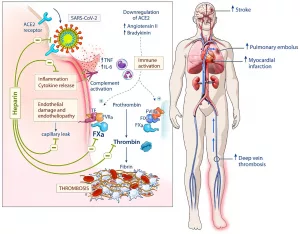
Authors: Brett L Houston, Patrick R Lawler, Ewan C Goligher, Michael E Farkouh, Charlotte Bradbury, Marc Carrier, Vlad Dzavik, Dean A Fergusson, Robert A Fowler, Jean-Phillippe Galanaud, Peter L Gross, Emily G McDonald, Mansoor Husain, Susan R Kahn, Anand Kumar, John Marshall, Srinivas Murthy, Arthur S Slutsky, Alexis F Turgeon, Scott M Berry, Robert S Rosenson, Jorge Escobedo, Jose C Nicolau, Lindsay Bond, Bridget-Anne Kirwan, Sophie de Brouwer, Ryan Zarychanski
Short Description: Mortality from COVID-19 is high among hospitalized patients and effective therapeutics are lacking. Hypercoagulability, thrombosis and hyperinflammation occur in COVID-19 and may contribute to severe complications. Therapeutic anticoagulation may improve clinical outcomes through anti-thrombotic, anti-inflammatory and anti-viral mechanisms. Our primary objective is to evaluate whether therapeutic-dose anticoagulation with low-molecular-weight heparin or unfractionated heparin prevents mechanical ventilation and/or death in patients hospitalized with COVID-19 compared to usual care.
Interest: Anti-thrombotic therapy, COVID-19, cardiac injury, venous thromboembolism, myocardial infarction, ischemic stroke